Mobile apps have dominated smartphones for over a decade, helping us communicate, shop, play games, and manage daily tasks. But the technology landscape is changing. The future of smartphones may not rely solely on traditional apps. New innovations in AI, cloud computing, and augmented reality are shaping the way we interact with devices.
Here’s a simple guide to what could replace mobile apps and how smartphones might evolve.
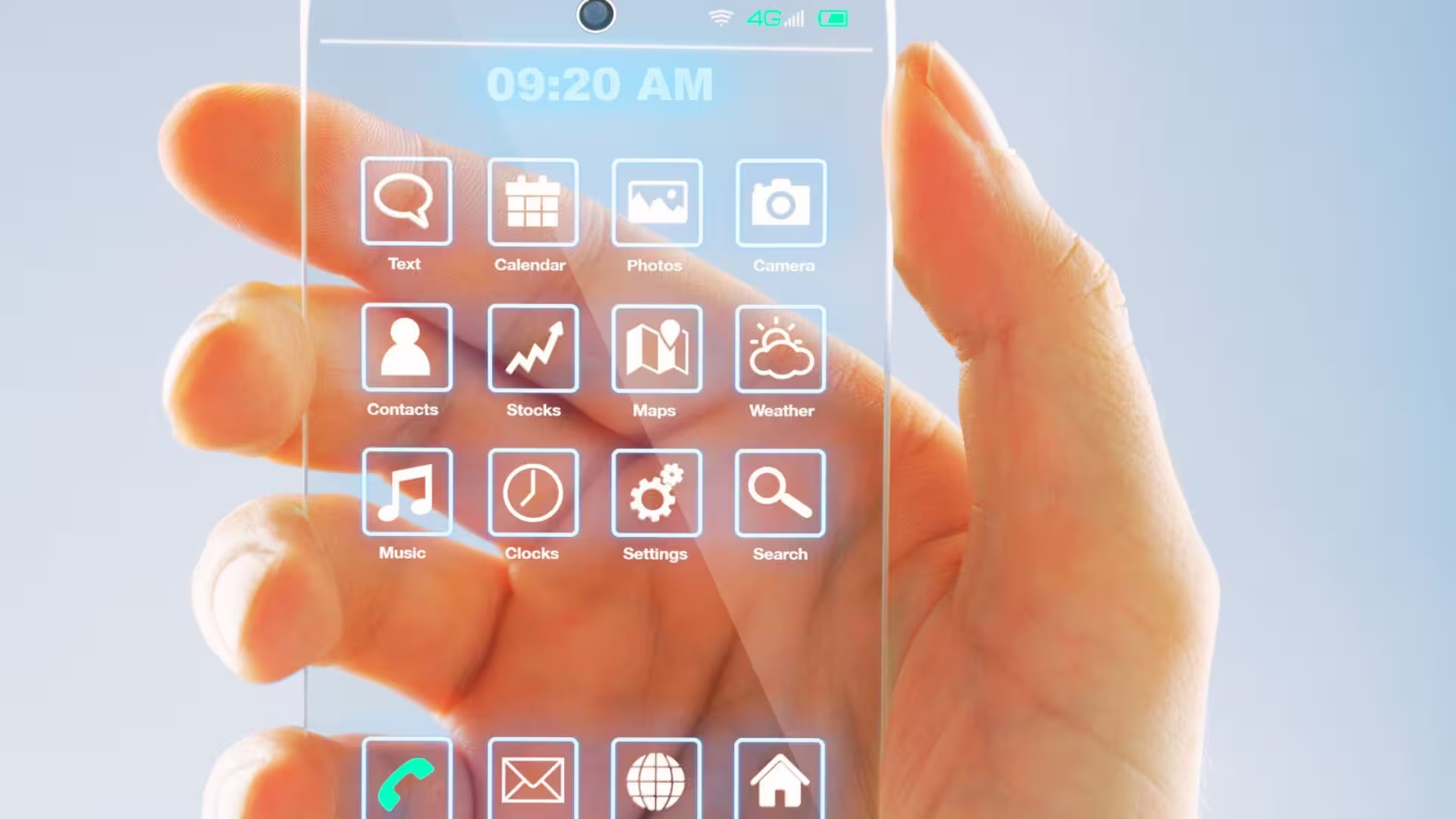
1. The Limitations of Traditional Mobile Apps
While mobile apps have transformed our lives, they have limitations:
- Apps take up storage space and require updates.
- Users often download multiple apps for similar functions.
- Fragmentation between operating systems can limit compatibility.
- Discoverability is difficult with millions of apps on app stores.
These challenges have created the need for more flexible, intelligent solutions.
2. Cloud-Based Web Apps
Cloud technology is changing the way we access software. Instead of downloading apps, users can access web-based platforms directly through browsers:
- Web apps can run on any device without installation.
- Updates happen automatically in the cloud.
- Users save storage space and can access apps from anywhere.
Cloud-based solutions are already replacing certain mobile apps for productivity, design, and communication.
3. AI-Powered Agents
Artificial intelligence is making apps smarter and more personalized. AI agents can perform tasks on behalf of users without a traditional app interface:
- Scheduling meetings, sending emails, or managing tasks.
- Recommending personalized content or products.
- Automating repetitive smartphone tasks.
These AI-driven assistants could reduce the need for multiple apps, simplifying user experiences. Platforms like nanouturf share insights on integrating AI workflows that can work across devices, hinting at a future without separate apps.
4. Augmented Reality (AR) Interfaces
AR could redefine how we interact with smartphones and digital content:
- Overlaying information directly onto the real world.
- Providing interactive guides, navigation, or shopping experiences without downloading apps.
- Using AR glasses or cameras as an interface for services traditionally handled by apps.
As AR technology improves, it may replace app-based interactions with more intuitive, immersive experiences.
5. Voice-First and Gesture-Based Interfaces
Voice assistants like Siri, Alexa, and Google Assistant are paving the way for app-free interactions:
- Users can complete tasks through voice commands.
- Gestures and facial recognition could control devices without touching the screen.
- Apps may become integrated features of operating systems rather than separate downloads.
This trend emphasizes convenience and speed, making smartphones more user-friendly for everyone.
6. Progressive Web Apps (PWAs)
PWAs combine the best of web apps and mobile apps:
- They can be installed on devices like apps but are delivered through browsers.
- They work offline and send push notifications.
- Users get app-like experiences without large downloads.
PWAs are gaining popularity as they reduce storage needs and simplify access, making them strong candidates to replace traditional apps.
7. Cross-Platform Integration
Future smartphones may focus more on ecosystems rather than individual apps:
- Devices seamlessly share data and functions across smartphones, tablets, and laptops.
- Users interact with services without opening separate apps.
- Integrated platforms reduce app dependency and streamline workflows.
Cross-platform systems will make digital experiences smoother, faster, and more connected.
You Can Also Read: cloud-computing
8. Security and Privacy Considerations
As app ecosystems evolve, security remains a major concern:
- Cloud and AI-based services must protect user data.
- Biometric authentication and encryption will play a bigger role.
- Users will demand transparency on how their information is used.
Balancing convenience and security is crucial for app alternatives to succeed.
Conclusion
The future of smartphones is moving beyond traditional mobile apps. Cloud-based web apps, AI agents, AR interfaces, voice-first interactions, and PWAs are changing how we interact with our devices. These technologies promise more efficient, personalized, and integrated experiences.
While apps will not disappear immediately, their role may shift as users adopt smarter, more seamless solutions. Staying informed about emerging trends and learning from experts, such as nanouturf, can help individuals and businesses prepare for a future where apps are no longer the central focus of smartphone usage.